Choosing the right colours for your website
Oct7Written by:
2009/10/07 11:13 AM 
 When designing a website many web designers give much detail to the design as far as layout menu structure, choice of graphics, and content, SEO, accessibility. But what about colours?
Even if you are not a web developer, the choice of the right colour and even the right colour combination can make or break your site. Having the wrong colour will, and I stress will scare away visitors, never to return.
Yes, I have punted the Content is King, but if your website hurts the eyes of your readers, all your hard work on content, design and SEO is flushed down the toilet.
The colours of your Web site are important because they will define the mood and emotions of your visitors as well as reflect your identity and image branding. A website's effectiveness as a sales tool can be greatly affected by simply changing its colours.
Remember though that your website is not an art gallery. It does not have to be artistic, it just has to be pleasing and easy to read. Remember also that what works on print does not work on the screen. Many forget this simple rule.
How important is colour in web design?
We live in a world of colour. It is all around us, in nature, in business, in our homes. It plays an important role in our social life, in our choice of partners. Wars and crimes have been committed because of the colour of people’s skin. Colour evokes emotions, has an effect on our body and brain. It stirs our desires and breaks down our inhibitions. Why then do so many feel that colour is not that important in their blog or website design.
Colours make us make decisions, call us to action, warm up, and encourage us. Colour communicates a message. What message is your website communicating?
Research reveals all human beings make a subconscious judgment about an item within 90 seconds of initial viewing. Between 62% and 90% of that assessment is based on colour alone. Research has also shown that about 40% of potential car buyers will change car brands if they cannot find one in their choice of colour. A house will sell better if it has a well crafted and recent colour job. Why then do we not see the importance of colour in our websites and blogs?
Yes, we can rightly conclude that colour really matters.
Choosing the right colours
If you are anything like me, I’m not a graphic artist, then choosing the right colour for your website can be a daunting task. If you can afford it, farm it out to a professional.
If you are doing it yourself you have so many things to think about, Colours, Hues, Saturation, Contrast. Colour themes and association. Wow so much stuff.
Some colour combinations are very hard on the eye, such as yellow text on a blue background, or luminous green on shocking pink. The reason you see black text on a white background so often is that it is the easiest colour combination to read, both on and offline.
Yes we all know that you like pink. But does it work? Is it too much? Do your readers like pink? Remember this, your website, although yours, is primarily meant for your visitors and readers. It is them you have to please.
Choose the right colour mood.
It is important to know that when designing a website you realise that some colours evoke different emotions. Colours are associated with specific concepts and say different things in different countries.
Colour is as much a science as any other field. It is important to choose the right colour for your website to invoke the correct mood and emotions as well as send the correct message.
Colours also have both positive and negative associations. I got this from Abacus Design. Some common colour associations are listed below:
Red:
Positive: Sense of power, strength, action, passion, sexuality and love
Negative: Anger, forcefulness, danger, impatience, violence and revenge
Yellow:
Positive: Brightness, warmth and joy
Negative: Caution and warning
Blue:
Positive: Cool and tranquil, patience, comfort, loyalty and security
Negative: Fear, coldness, passivity and depression
Orange:
Positive: Warmth, friendliness and cheerfulness, excitement and energy
Negative: Ignorance
Purple:
Positive: Royalty, sophistication, religion
Negative: Bruised or foreboding
Green:
Positive: Nature, growth, freshness and soothing
Negative: Envy, greed, guilt and jealousy
Black:
Positive: Dramatic, sophisticated and stylish, serious
Negative: Evil and death
White:
Positive: Pure, fresh, easy, cleanliness or goodness
Negative: Blind, winter, cold, distant
Colour Combination.
Once you have decided on the main colour then for your site, it is time to add some variations. Don’t go wild. Colours have a natural grouping together. Learn from nature.
Then keep in mind contrast. There is a reason why black font on white background is easier to read. They have a high contrast value.
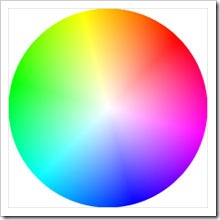
As a general rule, one primary colour and one or two secondary (or complimentary) colours should be chosen. This is where colour theory come in to it’s own. Making use of the colour wheel, contrast calculators.
Colour theory is such a vast topic that I cannot hope to cover all it’s aspects. Besides I am still learning. Here are some great websites to help with your choice of colours.
Color wheel and color theory
Colour contrast visualizer.
Color Jack
Colour theory basics
Colors on the web
Color theory for developers
Web design color
Color resources
Conclusion.
If nothing else you have come to realise that colour is very important. A continual re-evaluation of ones website and blog is needed. Make sure that your website is presenting the correct message, invoking the right emotions and moods.
What does the colours on your site say? Do you need to revisit it? Have you come across some horrendous websites with regards to colour? Leave your comments in the comment box below.
Related Reading:
Five essential aspects of web design.
Top 10 web design mistakes.
5 Great tips to improve your website and blog.
10 Easy Tips to Fix a Bad Site.
 New here, or perhaps you've been here a few times? Like this post? Why not subscribe to this blog and get the most up to date posts as soon as they are published.
blog comments powered by 5 comment(s) so far...
Re: Choosing the right colours for your website
Hi Robert.
I think that for text based blogs and site, a white or very light back ground works best as it's seems to make the text stand out. However, for photography based sites and blogs I prefer a black or dark background.
P.S. Any progress on getting rid of the captcha and having the comment section remember us each time we come back?
By Gordie Rogers on
2009/10/07 12:04 PM
|
Re: Choosing the right colours for your website
Well I think that any colour used is OK as long as the site is not cluttered.
By Evan Camilleri on
2009/10/07 05:15 PM
|
Re: Choosing the right colours for your website
Great post, Robert.
Your point (among many) about websites not being art galleries is spot on. I recall visiting a site recently that was headache invoking RED, had to click away and wondered, did this person actually look at this site themselves.
I'm no color expert, but once did custom interior painting, finding myself having to sway people from some outlandish color combos. :-) This is when I really learned how much some people love color, but have no real comprehension on how to put things together.
One other point I would make is that it's a good idea to view your site on different systems, as not all monitors and graphic boards render the same. Some may say that green is green, but you may be surprised at some renderings. Pull up your site while visiting a friend for another perspective.
Thanks for all the great color resource sites as well.
By Jimi Jones on
2009/10/07 07:22 PM
|
Re: Choosing the right colours for your website
I'm really glad I stumbled across this; I'm with the 'Content is King' folks but I totally agree that a neat page layout and visual display that sends the right messages is important. My current template is err.. questionnable? Replacement is in the pipeline though - perhaps a black, blue and white? Fresh, sophisticated and yet 'cool'?
By Ed Fry on
2009/10/08 09:38 PM
|
Re: Choosing the right colours for your website
@Ed,Thanks for the comment. I guess we both agree with each other. There must be truth in it. There is no one part that makes a good website, all parts need to work together. But certainly one part done incorrectly can make a bad website.When you're finished your make-over, drop us a note, would love to see it.
By Robert Bravery on
2009/10/09 07:45 AM
|