Five essential aspects of web design.
Jun4Written by:
2009/06/04 10:01 AM 
What makes a website successful. Just having a website up does not mean that people will visit it, let alone stay and browse. Professional website developers know too well the importance of web design and its part in making a website successful.
 Designing a website is easy. But it is difficult to design a successful website, This task is made even more difficult for someone who is new to the world of web design and development. There are many web development and design applications that can help and go a long way in creating half decent websites. But decent in most cases is not good enough to make a site successful.
In my scouring of the internet I found that there are five crucial components of web design that you must focus on in order to make a site valuable to its visitors and successful for you.
SEO
SEO or Search Engine Optimization is the process and task of optimising your site for the search engines to direct free traffic to your site.
The number one aspect of SEO is selecting keywords relevant to your site. The keywords you select should be based on high usage, low competition and relevancy to your topic
Usability
Usability is the ease of navigating around your site and the ability to easily find information. Visitors will not stay long if it takes more than one or two clicks to get the information they want or if it takes more than two brain cells to figure out how to get the information they want. In this world of instant, people want instant information.
A few things that are important to usability are:
- Provide simple, intuitive and consistent site navigation.
- Provide logical and simple to follow content.
- Provide a site search tool.
Aesthetics
Aesthetic, is the way a website looks and feels. It is the visual appeal. The User Interface. Your website has to look clean, uncomplicated, not necessarily unsophisticated. You have to have a balance in layout that is pleasant to the visitor, striking and yet simple graphics, and speed of delivery. Good aesthetics are achieved when the colours of a site complement each other. The graphics blend and extend the theme of the site. The layout is what unites all the website objects and present the content in a pleasing fashion.
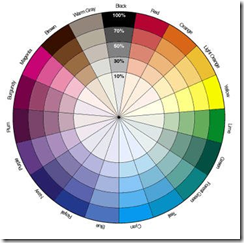 Colour of a site plays an important role in aesthetics. While you can select any colours you choose and still provide a visually appealing site, it is probably best to stick to proven colour strategies. Making use of and understanding the colour wheel will put you in good stead.
Check out his website on colour theory.
Many web designers use websites to boast the graphical design skills. By overpowering the users with too many complicated and slow loading fancy graphics. As well as loading the website up with tons of content. This normally results in a fast exit due to the overwhelming visual effect and complicated look.
A better approach is to allow less content and more white space. This allows the visitors eyes to scan your site without being overwhelmed.
Content
Valid, up-to-date, relevant information. Content Is King.
Any website can have loads of content. But the important factor here is the quality of the content. Visitors come to a site expecting to find answers to their questions, solutions to their problems or for some entertainment value. If the content does not deliver, then it’s bye-bye time. The content on your site must be well-written and without grammatical or spelling errors. The content must be relevant, valid and up-to-date.
Graphics
Eye candy that relays relevant visual information to the visitor.
You can have a functional and usable website without graphic elements. However, if there are similar sites to yours that employ graphics, guess which site will get the most traffic?
On the other hand too many graphics, graphics that are too big and take too long to download will also drive people away faster that you can say “Kodak”.
A well designed site has images and illustrations that complement the site. Graphics must support your branding, and communicate the message you are trying to convey. Before you incorporate graphic elements into your site, take some time to look around the web. Find out what looks good and what does not. Look at the high traffic sites in your niche and see how they employ the effective use of graphics.
Conclusion
Your site does not have to be dull and dreary. It can be vibrant and attract visitors. It’s purpose is to not only attract visitors but keep them there and entice them to return. Don’t let your site end up on the cyberspace junk heap.
Have you seen some good and bad websites? Let us know, so we can see what to do and what not to do.
blog comments powered by
4 comment(s) so far...
Re: Five essential aspects of web design.
If there is two things that annoy me when I visit a site, than it is to wait for a massive flash introduction. Second is annoying background sound. Most of it sounds like something from a seventies pron set. Keep fancy flash for photo's or presentations. Think the home page should be quick to download. People do not want to wait long for pages to download.
By Rustig on
2009/06/04 10:58 AM
|
Re: Five essential aspects of web design.
Agree 100% with your post. Especially the part of graphics and quality content. I think there is not better example for the graphics part than Google. You do not need fancy graphics to be the best site in the world. Simplicity and QUALITY content are king!
By Pieter on
2009/06/04 11:21 AM
|
Re: Five essential aspects of web design.
I use to use massive amounts of flash and although the sites looked great did not do very well on Google. Since I moved away from flash my sites do much better on Search engines. I must say I agree that content is king and static websites are dead in the water!
By Pieter van Wyk on
2009/06/07 11:00 AM
|
Re: Five essential aspects of web design.
Pieter,
The main reason, from a SEO perspective, is that flash cannot be searched, crawled and indexed. Similar to graphic files, or any binary file. How do you search a pic for a girl with brown hair. THe only way you can is if the pic has a alt tag with those keywords in it. Therefore, in order to get a flash site come up tops on Google, you have to do extra works, almost create a second Ghost site. A bit much I'd say.
By Robert Bravery on
2009/06/07 12:20 PM
|